Reggane Nord Development
Algeria · 2025 · ERW line pipe with variable wall thickness for a Saharan gas field development
- Volume850 MT
- Diameter406.4 mm (16 in)
- GradeX60 PSL2
- Wall range14.4–23.7 mm
The requirement
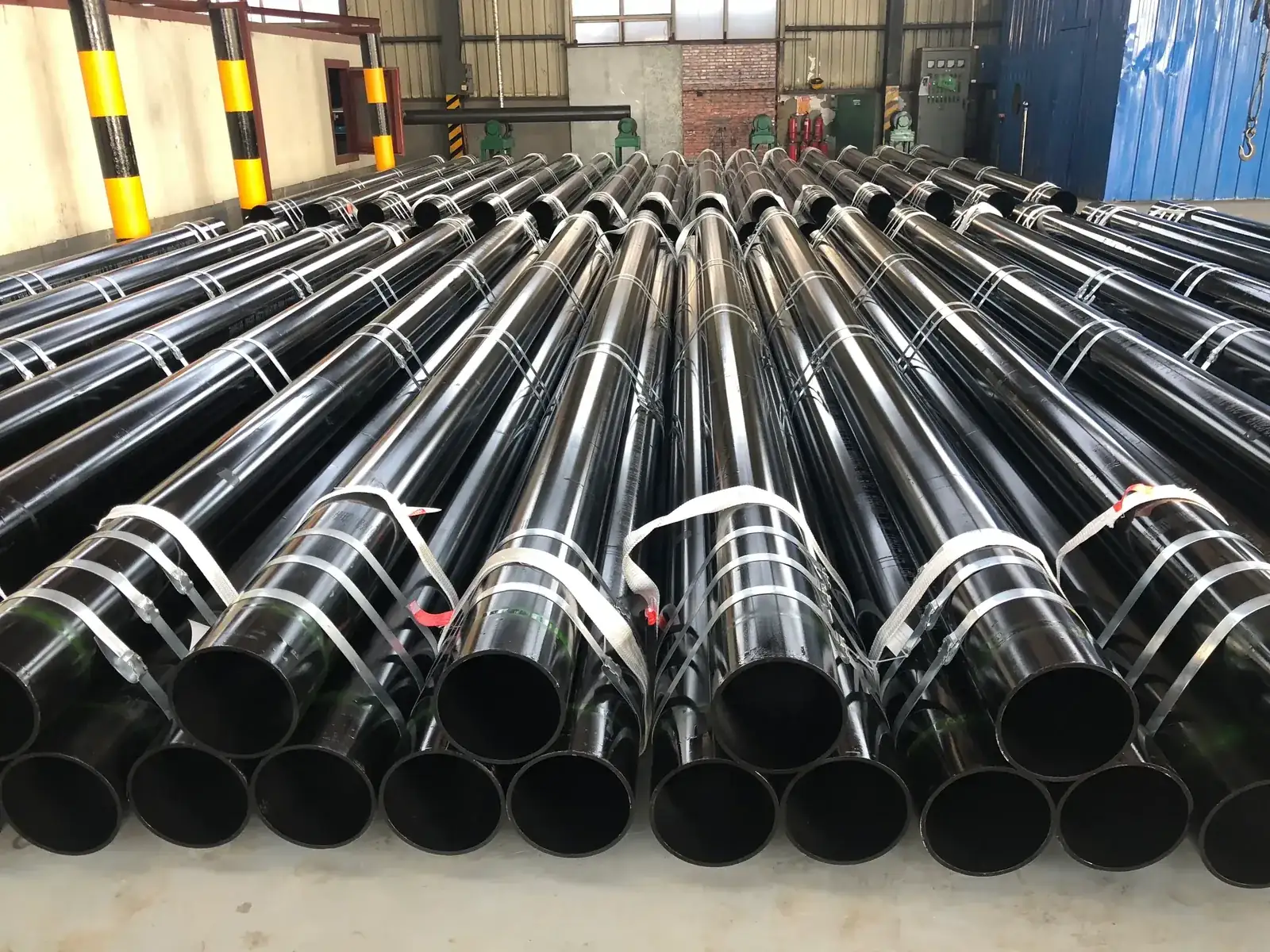
The Reggane Nord Development Project in the Algerian Sahara required ERW line pipe for gas gathering and transmission lines connecting well pads to the central processing facility. The project specified API 5L X60 PSL2 in 406.4 mm (16-inch) diameter, with wall thickness varying from 14.4 mm to 23.7 mm across six thickness classes — each corresponding to a different pressure-rating section of the pipeline.
The variable wall thickness approach allowed the pipeline designer to optimise material usage: thinner wall for low-pressure segments near the processing facility, thicker wall for high-pressure segments near the wellheads. PSL2 was specified for its tighter chemistry control and mandatory impact testing — essential for the wide temperature range of the Saharan climate.
Scope of Supply
| Product | ERW (Electric Resistance Welded) line pipe |
|---|---|
| Standard | API 5L (46th edition) / ISO 3183, PSL2 |
| Grade | X60 (L415) PSL2 |
| Outside diameter | 406.4 mm (16 in) |
| Wall thickness | 14.4 / 16.5 / 18.2 / 19.8 / 21.8 / 23.7 mm (6 classes) |
| Length | 12 m nominal, random 11.5–12.2 m |
| Pipe ends | Bevel 30° +5°/0°, plain ends, per API 5L 9.8 |
| Hydrostatic test | Per API 5L 9.4, 100% mill hydrostatic |
| Non-destructive testing | 100% UT on the weld seam, per API 5L 9.6 |
| CVN impact test | Per PSL2 requirement, tested at design temperature |
| Documentation | EN 10204 3.1 mill certificates, heat-number traceability |
| Total quantity | 850 MT |
How It Was Manufactured
Coil inspection
X60 PSL2 coil inspected by UT, with chemistry and tensile properties verified per heat. CVN impact test performed to confirm toughness at the Saharan design temperature range.
ERW forming and welding
Coil unrolled, levelled and roll-formed to tube shape, then welded by high-frequency electric resistance. Inner weld bead trimmed and outer weld bead scarfed to smooth profile.
Sizing and testing
Pipe sized by roll stands to API 5L diameter tolerance, then hydrostatically tested per API 5L 9.4. Weld seam scanned by 100% UT per API 5L 9.6.
End prep and dispatch
Bevel applied, end protectors fitted, wall thickness class and heat number stencilled for field identification. EN 10204 3.1 certificates issued per thickness class.
Delivery Schedule
Order confirmed
Wall thickness schedule, PSL2 testing plan and inspection requirements approved with the operator's engineering team.
Production
Six wall thickness classes produced in sequence, each with dedicated coil chemistry verification and CVN impact testing.
Inspection
100% UT on weld seams, hydrostatic test per API 5L, dimensional verification per thickness class. EN 10204 3.1 certificates prepared.
Shipment
Loaded and shipped to Algeria, with pipe sorted by wall thickness class for efficient field distribution.
What Made the Difference
- Six wall thickness classes from one order. Producing six different wall thicknesses in the same diameter and grade required precise coil selection and setup changes per class. The mill delivered all six without schedule slippage, letting the contractor match each pipe to its pressure-rated section on site.
- PSL2 toughness for Saharan conditions. Sahara temperatures swing from near-freezing at night to 50 °C in the day. PSL2 CVN impact testing at the design temperature ensured the pipe would not become brittle under cold-night conditions.
- ERW efficiency for medium diameter. For 16-inch pipe, ERW production is faster and more economical than LSAW — without compromising on PSL2 testing rigour. The weld seam was 100% UT tested and the full order hydrostatically verified.
Related Work
Other case studies
Technical guide
Browse all project case studies · the steel pipe FAQ.
Planning a multi-section pipeline?
Send us the pressure profile and diameter — we will propose a wall thickness schedule that optimises material usage.