
Structural Steel Pipe Manufacturer & Supplier
Hollow section steel pipe for load-bearing frames, piling and infrastructure — supplied in CHS, SHS and RHS to ASTM A500, EN 10219 and EN 10210.
Quote Now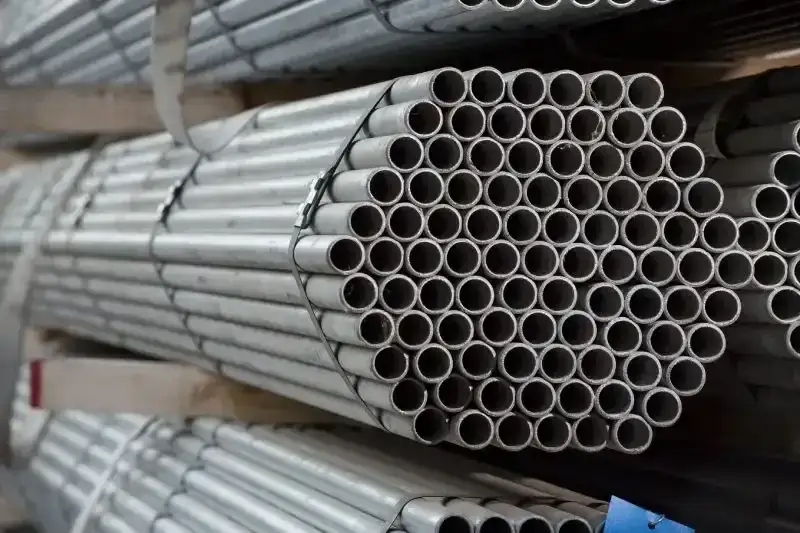
What Is Structural Steel Pipe?
Structural steel pipe — also called hollow structural section (HSS) — is a steel tube used as a load-bearing member in buildings, bridges, industrial plants and piling systems. Because the material sits at the outer edge of the section, a hollow tube delivers high bending and torsional stiffness at a lower weight than a solid bar of the same strength.
Three section shapes cover most structural work: circular hollow sections (CHS) for columns, piles and bracing; square hollow sections (SHS) for columns and frames; and rectangular hollow sections (RHS) for beams, trusses and machine bases.
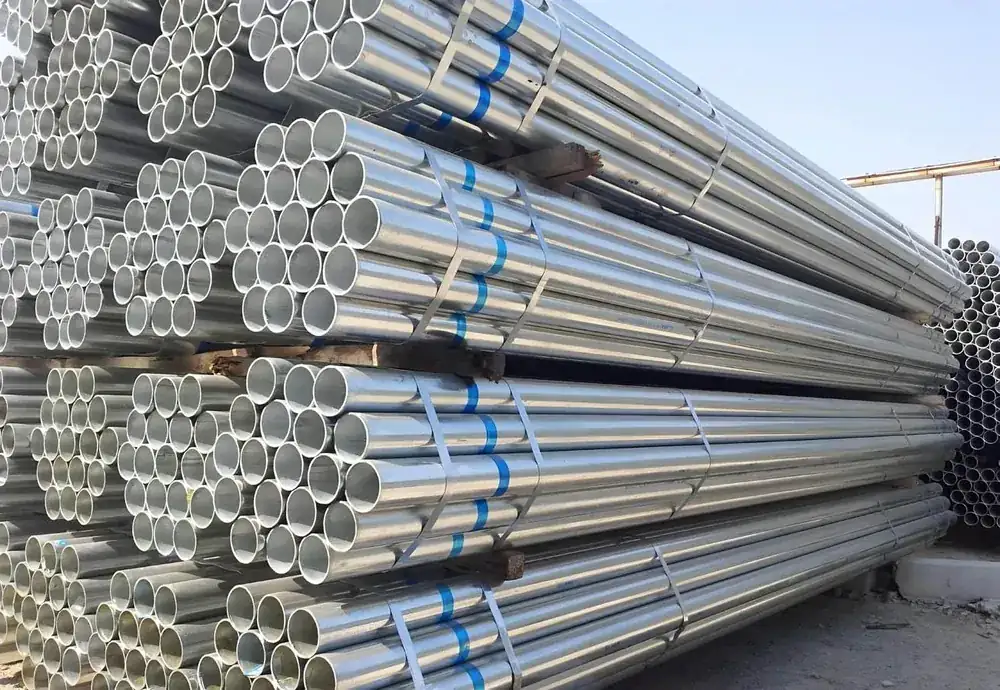
Structural pipe is cut, drilled, welded and galvanized at our Cangzhou facility. Sections are cut to length, end-prepped for site welding, and can be supplied with hot-dip galvanizing or 3LPE coating where the structure is exposed to weather or buried.
Structural Steel Pipe Specifications
Structural hollow sections are supplied in a wide range of sizes and wall thicknesses for building frames, piling, bridge works and general fabrication. Section size, wall class and steel grade should be confirmed against the structural design before ordering.
| Product Name | Structural Steel Pipe |
|---|---|
| Section Types | CHS (circular), SHS (square), RHS (rectangular) |
| Manufacturing Process | ERW / HFW, LSAW or SSAW depending on size and wall thickness |
| Outside Diameter (CHS) | 21.3–1420 mm |
| Square / Rectangular Size | 12×12 mm up to 400×400 mm, subject to availability |
| Wall Thickness (WT) | 1.8–40 mm |
| Pipe Length | 6 m, 12 m, or cut to project length |
| Steel Grades | ASTM A500 Gr.A / B / C, EN 10219 S235JRH / S275J0H / S355J2H, EN 10210 S275J0H / S355J2H, GB/T 6728, and other available grades |
| Applicable Standards | ASTM A500, EN 10219, EN 10210, GB/T 6728, subject to product type |
| Pipe Ends | Plain end, bevelled end, or cut square for site welding |
| Surface Treatment | Bare, painted, hot-dip galvanized or 3LPE coated |
| Fabrication | Cutting, drilling, end preparation and welding as specified |
| Inspection | Dimensional check, weld inspection, tensile and bend testing as required |
| Documentation | Material Test Certificate (MTC) and third-party inspection reports upon request |
| Applications | Building frames, piling, bridge works, crane rails, machine bases, industrial structures |
Note: Available sections, grades and finishes are subject to production capability and order specifications. Please contact Starkpipes to confirm availability for your structural design.
Section Shape Selection
| Section | Typical Use | Key Advantage |
|---|---|---|
| CHS – Circular | Columns, piles, bracing, exposed structures | Uniform strength in all directions; low wind resistance |
| SHS – Square | Columns, posts, frames, architectural work | Equal bending capacity about both axes; clean appearance |
| RHS – Rectangular | Beams, trusses, machine frames, lintels | Depth-to-width ratio matched to bending direction |
Structural Steel Pipe Standards and Grades
Structural hollow sections are specified by standard, grade and section size. The choice between cold-formed and hot-finished sections affects residual stress, corner radius and impact performance at low temperature.
ASTM A500
Cold-formed welded and seamless carbon steel structural tubing in round, square and rectangular shapes. Grade B and Grade C are most common for building and bridge work.
EN 10219
Cold-formed welded hollow sections for structural use. Grades S235JRH, S275J0H and S355J2H cover most building frames; J0 and J2 designations define impact testing temperature.
EN 10210
Hot-finished hollow sections, with lower residual stress and different corner geometry than cold-formed. Often specified where forming effects or low-temperature toughness matter.
Cold-Formed vs Hot-Finished
Cold-formed sections (EN 10219 / ASTM A500) are produced from strip and have tighter corner radii, thinner walls for a given strength, and higher residual stress. Hot-finished sections (EN 10210) are normalized after forming, giving more uniform properties and better performance where low-temperature impact or heavy welding is involved. The structural specification usually states which route is acceptable.
Applications of Structural Steel Pipe
Hollow sections are used wherever stiffness, weight and a clean profile matter. The coating system should be selected according to the exposure conditions at the site.
Building Frames
Columns, roof trusses and portal frames for warehouses, plants and commercial buildings.
Piling & Foundations
CHS and SHS piles for deep foundations, marine works and ground improvement.
Bridge & Infrastructure
Bridge bracing, sign gantries, station structures and highway furniture.
Industrial Equipment
Machine bases, crane rails, conveyor frames and heavy support structures.
Fabrication and Quality Control at Our Cangzhou Facility
Structural pipe is cut, end-prepped and inspected under one roof, which keeps the dimensional tolerance between sections and the delivery schedule consistent across a steel package.
Cut to Length
Sections cut to drawing length with square or bevelled ends for site welding.
Dimensional Inspection
Outside dimension, wall thickness, corner radius and straightness verified per standard.
Weld Inspection
Seam and fabrication welds checked visually and by NDT where specified.
Coating & Packing
Hot-dip galvanizing or 3LPE applied, with export packing and marking per bundle.
FAQ
Related Products
Further Reading & Applications
Supplier selection
Structural pipe in the field
Need help selecting a grade or wall thickness? Read the steel pipe FAQ · send your specification.
Request a Steel Pipe Quote
Share your technical requirements. We provide compliant, high-performance pipe solutions with a guaranteed 24-hour response time.
- ✓ Strict adherence to API 5L & International Standards
- ✓ Tailored production for custom OD, WT, and steel grades
- ✓ End-to-end logistics support to your specified port